
EV Charger Tax Credit Deadline: June 30, 2026
Introduction
Electric vehicle market dynamics continue evolving as federal incentive programs phase out while technology and affordability improvements advance. The federal $7,500 EV tax credit for new vehicle purchases ended on September 30, 2025, following passage of comprehensive legislation, while the Alternative Fuel Vehicle Refueling Property Tax Credit for charger installations remains available through June 30, 2026. Ford announced plans to introduce eyes-off Level 3 autonomous driving technology on a $30,000 all-electric pickup launching in 2028, with an AI assistant rolling out to up to 8 million drivers starting early 2026. MotorTrend declared Tesla's FSD Supervised the best driver assistance system on the market following extensive testing of version 14, with unsupervised FSD anticipated to launch in select cities and states during 2026. Industry forecasts project EVs will account for 27.5 percent of global vehicle sales in 2026 and 11.8 percent of the U.S. market, with approximately 1,000 models available worldwide. The United States reached 172,911 public AC Level 2 charging ports as of January 1, 2026, though AC infrastructure lagged DC fast charging with just 11.5 percent net growth. At Shaffer Construction, Inc., we help Los Angeles property owners maximize available incentives before the June 30, 2026, charger tax credit deadline through expert commercial EV charger installations and residential charging solutions. Here are the most significant developments shaping the EV landscape this week.
Federal EV Tax Credit Ended While Charger Installation Credit Remains Through June 30, 2026
The federal EV tax credit providing up to $7,500 for new electric vehicle purchases ended on September 30, 2025, following passage of legislation known as the One Big Beautiful Bill in July 2025. Very limited eligibility remains in 2026 for smaller or newer EV manufacturers such as Rivian, Lucid, Honda, Mazda, and a handful of others, while popular brands including Tesla, General Motors, Ford, Hyundai, Kia, Volkswagen, and Nissan no longer qualify since they exceeded the sales cap. All EV tax credits for new, used, and commercial vehicles are scheduled to end completely on January 1, 2027. Source: Union of Concerned Scientists.
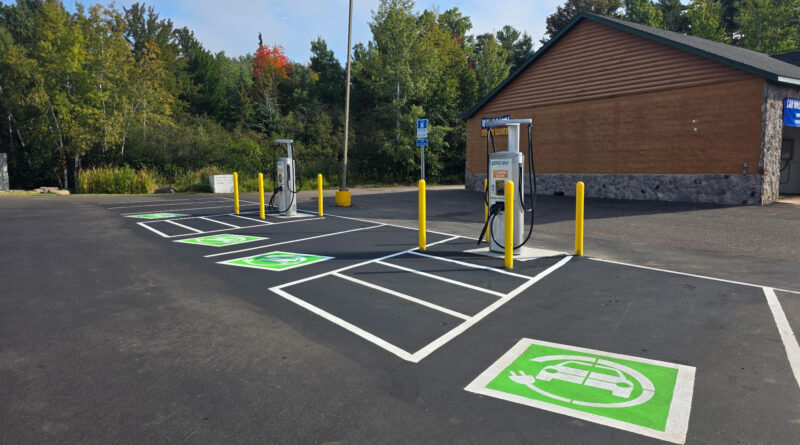
However, the Alternative Fuel Vehicle Refueling Property Tax Credit for charger installations remains available through June 30, 2026. If you install EV charging equipment at your home or business before this deadline, you may be eligible for a credit equaling 30 percent of the combined cost of installation, charging equipment, and related materials, up to a maximum credit of $1,000 per item for residential installations. The credit provides significantly more support for commercial and multifamily installations. This represents the final opportunity to capture federal incentives for charging infrastructure installations, as the program is currently scheduled to expire without renewal. Source: EV Club CT.
For Los Angeles property owners considering charging infrastructure, the June 30, 2026, deadline creates clear urgency. Projects must be completed and operational before this date to qualify for the federal tax credit. The timeline requires property owners to begin planning and engineering work immediately, as the complete installation process including site assessment, electrical load studies, permitting, equipment procurement, installation, and final inspection can take several weeks to several months depending on project complexity. As we discussed in our coverage of California's $79 million NEVI grant program, multiple funding sources exist for charging infrastructure, but the federal charger tax credit represents the most accessible option for residential and small commercial installations.
Ford Announces $30,000 Electric Pickup with Eyes-Off Autonomous Driving for 2028
Ford Motor announced plans at CES 2026 to introduce eyes-off Level 3 autonomous driving technology on an upcoming $30,000 all-electric vehicle launching in 2028. The next generation of BlueCruise will permit eyes-off driving, starting in 2028 with the Universal EV platform that will underpin a new small truck. The first vehicle based on the platform will be a four-door midsize electric pickup in 2027, starting at around $30,000. Ford said the breakthrough EV will offer more passenger space than a Toyota RAV4 including the frunk and bed, and will be as fast as the Mustang EcoBoost. Source: CNBC.
Level 3 autonomy represents a significant advancement over the Level 2 driver assistance systems currently available on most vehicles. Level 2 systems like Tesla's FSD Supervised, GM's Super Cruise, and Ford's current BlueCruise require continuous driver attention and hands ready to take control, though hands-free operation is permitted under certain conditions. Level 3 systems allow drivers to take their eyes off the road during system operation, with the vehicle handling all driving tasks under specific conditions while the driver must remain ready to take control when requested. This enables drivers to engage in other activities like using their phone, eating, or working during the autonomous driving portions of their journey. Source: Car and Driver.
Ford also announced plans to launch a new AI Assistant in early 2026 through the Ford and Lincoln apps. Starting in 2027, it will roll out to up to 8 million drivers. The company is shifting strategy away from second-generation versions of existing EVs, instead focusing on hybrids, extended range electric vehicles, and electric models riding on the new Universal EV Platform. The automaker plans to offer a hybrid or multi-energy powertrain choice for nearly every vehicle it sells by the end of the decade, with five new affordable vehicles launching within the same timeframe, four of which will be assembled in the U.S. Source: Electrek.
Tesla FSD Version 14 Named Best Driver Assistance System on Market
MotorTrend declared Tesla's FSD Supervised the best driver assistance system on the market following extensive testing of version 14, stating there is no system more advanced than Tesla's FSD Supervised at assisting drivers based on their evaluations. FSD version 14 is vastly improved over the previous system, version 12, tested in 2025. Tesla continues rolling out FSD v14 releases to Hardware 4 vehicles in January 2026, while Hardware 3 vehicles currently on version 12 are expected to receive a FSD v14 Lite version in Q2 of 2026. Source: MotorTrend.
The latest releases include several significant new capabilities. Drivers can now select an arrival option such as Parking Lot, Street, Driveway, Parking Garage, and Curbside for robotaxi-style drop-offs. FSD Supervised will now determine the appropriate speed based on a mix of driver profile, speed limit, and surrounding traffic. Tesla is currently offering FSD demo rides in Europe with a potential launch as early as Q1 2026, and the company is close to launching FSD in Israel in the near future. Source: AutoPilot Review.
With Supervised FSD now operating at a safety margin exceeding human drivers according to Tesla's internal metrics, 2026 is positioned as the year for Unsupervised FSD launch, with Tesla pushing for deployment in certain cities and states with geofenced areas where unsupervised FSD is permitted. At CES 2026, Nvidia announced its Alpamayo autonomous driving platform as a competitor to Tesla's FSD, prompting Elon Musk to comment on distribution challenges, stating that competitors will find that it's easy to get to 99 percent and then super hard to solve the long tail of the distribution. Source: Global China EV.
As we covered in our analysis of Tesla's Austin robotaxi service, the company continues operating with safety drivers present as it works toward fully unsupervised operation. The advancement of autonomous driving technology influences charging infrastructure requirements, as autonomous vehicles will need to navigate to charging locations and potentially initiate charging sessions without human intervention.
Industry Forecasts Project 27.5 Percent Global EV Market Share in 2026
Industry analysts forecast that EVs will account for 27.5 percent of global vehicle sales in 2026, showing continued strong growth in the worldwide market. Global EV sales hit 18.5 million units in the first 11 months of 2025, up 21 percent year-over-year. However, the market shows significant regional contrasts. Global sales surged by 21 percent in 2025, fueled by China's continued dominance and a resilient European recovery, while the North American market faced significant headwinds. North American EV sales in 2025 were down 1 percent to 1.7 million units. Source: EV Volumes.
For the United States specifically, EVs are expected to account for 9.1 percent of total vehicle sales in 2025, with projections indicating it could rise to 11.8 percent in 2026. Approximately 785 electric car models were available for consumers in 2024, and it is predicted that 1,000 models will be available by 2026, providing consumers with unprecedented choice across all vehicle segments and price points. Gartner is forecasting that plug-in hybrid electric vehicle sales will rise by 32 percent in 2026, suggesting growing interest in hybrid options that combine electric driving capability with gasoline range extension for buyers not yet ready to commit to fully electric vehicles. Source: Nasdaq.
The forecasts indicate that while EV adoption continues advancing globally, growth rates are moderating from the explosive expansion seen in prior years. However, as we noted in our coverage of affordable EVs like the Rivian R2 and returning Chevrolet Bolt, new vehicle availability at lower price points should help sustain adoption momentum even without the federal purchase tax credit that ended in September 2025.
US AC Level 2 Charging Network Reaches 172,911 Ports with 11.5 Percent Growth
The United States reached 172,911 public AC Level 2 charging ports as of January 1, 2026, though AC charging infrastructure lagged behind DC fast charging with just 11.5 percent net growth compared to the 33 percent expansion in DC fast-charging ports. This slower growth in Level 2 charging infrastructure reflects the market's focus on deploying high-power DC fast-charging along highways and in public locations where rapid charging is essential. However, Level 2 charging remains the optimal solution for workplace, multifamily residential, hospitality, and destination charging applications where vehicles park for extended periods. Source: EV Charging Stations.
Level 2 charging typically delivers 6 to 19 kilowatts depending on the vehicle's onboard charger capacity and the electrical circuit configuration, providing 20 to 60 miles of range per hour of charging. While this is dramatically slower than DC fast-charging which can deliver 50 to 350 kilowatts, Level 2 charging's lower power requirement makes it more practical and cost-effective for installations at locations where vehicles park for multiple hours. A vehicle parked for eight hours overnight can receive a complete charge from a Level 2 charger, while the same charge from a DC fast-charger might take 30 to 60 minutes but requires substantially more expensive equipment and electrical infrastructure. Source: EV Charging Stations.
For Los Angeles property owners, Level 2 charging represents the practical choice for most commercial and residential applications. Shaffer Construction specializes in properly sizing electrical infrastructure through comprehensive electrical load studies to determine how many charging ports a property can support within existing electrical capacity, or what electrical service upgrades are required to accommodate desired charging capabilities. With the federal charger tax credit deadline of June 30, 2026, approaching rapidly, property owners should begin the planning process immediately to ensure projects can be completed before the incentive expires.
What These Developments Mean for Los Angeles Property Owners
The end of the federal EV purchase tax credit in September 2025 removes a significant incentive that drove EV adoption over the past several years, though the market continues expanding based on improving vehicle technology, increasing model availability, and falling prices in both new and used segments. However, the Alternative Fuel Vehicle Refueling Property Tax Credit for charger installations remains available through June 30, 2026, creating a clear deadline for property owners to act if they want to capture federal incentives. Projects must be completed and operational before this date, requiring immediate action to initiate planning, engineering, permitting, and installation processes.
Ford's announcement of a $30,000 electric pickup with Level 3 autonomous driving for 2028 and Tesla's FSD version 14 recognition as the best driver assistance system demonstrate that vehicle technology continues advancing rapidly. Industry forecasts projecting 27.5 percent global EV market share and 11.8 percent U.S. market share in 2026, along with approximately 1,000 models available worldwide, indicate that the EV population will continue expanding despite the elimination of purchase incentives. Properties with charging infrastructure will be positioned to serve this growing EV fleet across all vehicle segments and price points.
The relatively slower growth in AC Level 2 charging infrastructure compared to DC fast-charging reflects market dynamics, but Level 2 charging remains the optimal solution for workplace, multifamily residential, hospitality, and destination charging applications where vehicles park for extended periods. For Los Angeles property owners, the June 30, 2026, federal tax credit deadline creates urgency to implement charging capabilities while maximizing available incentives.
Conclusion
The federal $7,500 EV tax credit for new vehicle purchases ended on September 30, 2025, while the Alternative Fuel Vehicle Refueling Property Tax Credit for charger installations remains available through June 30, 2026. Ford announced plans to introduce eyes-off Level 3 autonomous driving on a $30,000 all-electric pickup launching in 2028, with an AI assistant rolling out to 8 million drivers starting early 2026. MotorTrend declared Tesla's FSD Supervised version 14 the best driver assistance system on the market, with unsupervised FSD anticipated to launch in select locations during 2026. Industry forecasts project EVs will account for 27.5 percent of global vehicle sales in 2026 and 11.8 percent of U.S. market share, with approximately 1,000 models available worldwide. The United States reached 172,911 public AC Level 2 charging ports as of January 1, 2026, with 11.5 percent growth compared to 33 percent for DC fast-charging. For Los Angeles property owners, the June 30, 2026, charger tax credit deadline requires immediate action to initiate projects that can be completed before the incentive expires.
Ready to explore EV charging options for your Los Angeles property? Contact Shaffer Construction, Inc. for a complimentary site assessment and expert guidance on selecting the right charging solution for your needs before the June 30, 2026, federal tax credit deadline.
Shaffer Construction, Inc.
325 N Larchmont Blvd. #202
Los Angeles, CA 90004
Phone: (323) 642-8509
Email: hello@shaffercon.com
Website: shaffercon.com