
Autel Deploys 100,000 EV Chargers with Payments
Introduction
Autel Energy announced the launch of its MaxiCharger AC Single with integrated Nayax Uno Mini payment device on January 6, 2026, enabling app-free credit card payment acceptance directly at the charger with support for contactless EMV, chip insert, and NFC wallet payments. The deal calls for Nayax to embed its payment technology into an estimated 100,000 Autel EV chargers expected to be deployed across North America and Europe in 2026, eliminating the registration and app requirements that create friction in public charging experiences. Multifamily housing charging solutions are expanding rapidly as properties recognize that EV charging stations are no longer a luxury but an expectation among residents, with Level 2 chargers providing 6 to 8 hour overnight charging that perfectly matches typical parking patterns while load management technology enables installations on limited electrical service. CATL announced it will start commercial production at scale of sodium-ion batteries in 2026, with current energy density topping at about 175 watt-hours per kilogram and projections that by the end of 2026 only high-performance EVs will use nickel-based batteries while mainstream vehicles transition to LFP and sodium-ion chemistries. AI-driven energy management is becoming foundational for EV charging in 2026, with the market expanding from $1.5 billion in 2024 to projected $4.78 billion by 2029, enabling real-time power adjustments, intelligent capacity distribution, and dynamic pricing aligned with utility tariffs. At Shaffer Construction, Inc., we help Los Angeles property owners implement multifamily charging solutions with smart load management, integrated payment systems, and grid-responsive technology through expert commercial EV charger installations and residential charging solutions. Here are this week's most significant developments.
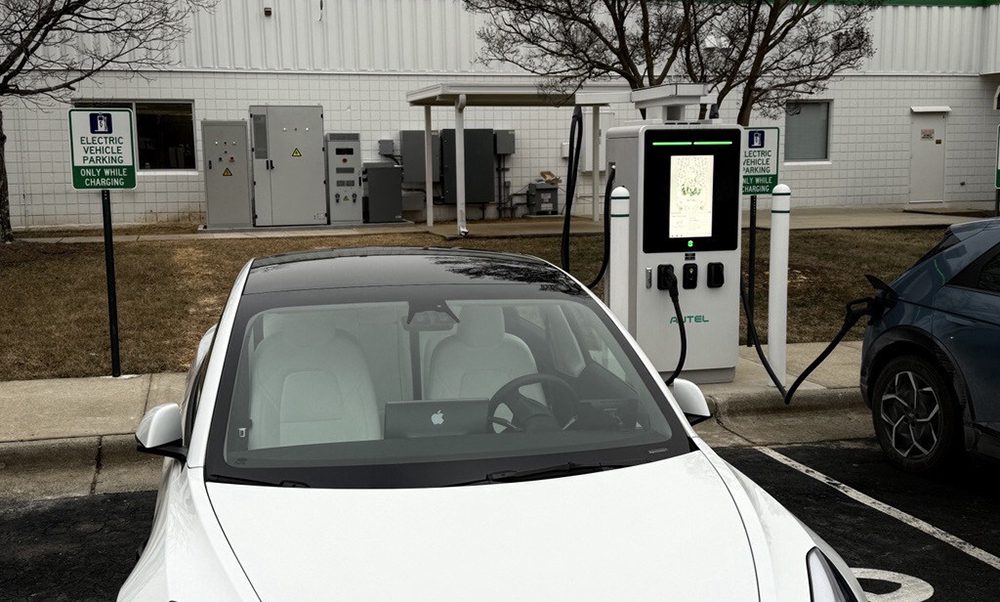
Autel Energy and Nayax Deploy 100,000 Chargers with Integrated Contactless Payments
Autel Energy launched its new MaxiCharger AC Single configuration for U.S. markets on January 6, 2026, featuring an integrated Nayax Uno Mini payment device that delivers app-free credit card payment capabilities directly at the charger. The embedded Nayax Uno Mini system adds support for contactless EMV, chip insert, and NFC wallet payments. Users benefit from app-free, registration-free charging for public access, while RFID and closed-loop payment options remain available for fleet and controlled access deployments. The design eliminates the common frustration of downloading apps and creating accounts before charging, addressing one of the primary user experience complaints about public charging infrastructure. Source: Charged EVs.
The deal calls for Nayax to embed its payment technology into an estimated 100,000 Autel EV chargers expected to be deployed across North America and Europe in 2026. Nayax accepts over 80 different cashless payment methods including credit and debit cards, EMV contact and contactless, mobile NFC payments, QR codes, and prepaid cards, supporting 80-plus payment methods in 70-plus countries in 50-plus currencies. This global compatibility ensures that charging infrastructure can serve diverse user populations including international visitors without requiring region-specific payment solutions. Source: Digital Transactions.
According to the National Renewable Energy Laboratory, if we want to build consumer trust around the promise of a reliable national charging network, we need to maintain a seamless charging experience with ease of payment as a core focus of public EV charging network expansion. Modern payment systems combine on-site payment terminals with back-end charge point management systems and payment gateways so drivers can pay for electricity using contactless credit and debit cards, mobile apps, RFID cards, or Plug and Charge ISO 15118 standard. A study by PwC projects the number of EV charging points in the United States to grow from about 4 million to an estimated 35 million by 2030, making payment system usability increasingly important as charging infrastructure scales. Source: NREL.
For Los Angeles commercial properties installing public or semi-public charging infrastructure, integrated payment systems eliminate the operational complexity of managing separate payment terminals while providing superior user experience compared to app-only payment models. As we discussed in our coverage of California's 2026 building code requiring EV charging in new residential units, properties must balance compliance requirements with user experience considerations, and payment system design significantly impacts charging utilization and satisfaction rates.
Multifamily Housing Charging Solutions Expand as Resident Expectation Grows
EV charging stations for multifamily housing, also called multi-unit dwellings or MUDs including condos and apartments, provide property owners with a unique way to help attract and retain residents and foster energy-efficient communities. Apartment and condo EV charging stations are no longer a luxury but an expectation among residents. Installing EV chargers significantly improves property desirability and helps attract premium tenants. Properties can generate additional income by implementing fee-based charging services with options including premium parking rates for EV spaces, charging session fees, and even public access during off-peak hours. Source: Alternative Fuels Data Center.
Level 2 EV chargers are an excellent choice for most apartment and condominium properties as they are cost-effective, requiring significantly lower initial investment and operational costs compared to DC fast chargers. With 6 to 8 hour charging times, they perfectly match typical overnight parking patterns of residents. Level 2 AC charging adds up to 37 miles of range per hour, providing sufficient daily charging for most drivers who can connect overnight. Condo EV charging solutions with smart features allow users to track charging progress, schedule sessions, and receive alerts through mobile apps. To prevent unauthorized use, recommended stations include RFID card access, key fobs, or app-based authentication. Load management allows for more chargers to be installed on limited electrical service by intelligently distributing available capacity among active charging sessions. Source: BTC Power.
Many states are requiring that construction of new MUDs includes EV charging stations or at least EV-capable parking spaces. Beginning in 2025 in Delaware, at least 5 percent of parking spaces at new MUDs must have EV chargers and 10 percent must be charging capable. In New Jersey, new MUD developments with five or more units must designate 15 percent of off-street parking as make-ready for EVs. Prior to occupancy, 5 percent of spaces must have EV charging stations installed, with 5 percent additional after three years and another 5 percent within six years. California's 2026 building code requires that any new unit with a parking space in a multi-family development have at least one EV Ready parking spot. Source: GreenLancer.
For Los Angeles multifamily property owners, the combination of building code requirements, demonstrated resident demand, and available incentive programs creates compelling reasons to implement charging infrastructure. Shaffer Construction specializes in multifamily charging installations that incorporate load management technology to maximize the number of charging ports within existing electrical capacity, implement smart charging features that enhance user experience and enable revenue generation, and comply with California building code requirements. As we noted in our analysis of workplace charging utilization surging 57 percent, convenient charging access has become a key amenity influencing residential and employment decisions.
CATL Launches Sodium-Ion Battery Production at Commercial Scale in 2026
Battery market leader CATL announced it will start commercial production at scale of sodium-ion batteries in 2026. CATL is not abandoning lithium-ion batteries yet, but sees sodium as more promising in the long term. Current energy density is still not on par with lithium-ion cells, topping at about 175 watt-hours per kilogram. However, sodium-ion batteries offer several advantages including elimination of cobalt and nickel requirements, abundant and low-cost sodium raw materials, superior low-temperature performance, and enhanced safety characteristics compared to conventional lithium-ion chemistries. Source: AutoEvolution.
Over 76 percent of the passenger electric vehicles sold in China use LFP lithium iron phosphate cells. The percentage rises to 99 percent in buses and trucks. By the end of 2026, only the high-performance EVs will use nickel-based batteries while mainstream vehicles transition to LFP and sodium-ion chemistries. This shift reflects the automotive industry's response to supply chain vulnerabilities and cost pressures by adopting battery chemistries that use more abundant and geographically diverse raw materials. LFP batteries eliminate cobalt requirements entirely, while sodium-ion batteries additionally eliminate lithium and nickel dependencies. Source: AutoEvolution.
China accounts for 70 percent of positive electrode materials and 85 percent of global production capacity of negative electrode materials. They also process raw materials for lithium, cobalt, and graphite, with half the world's production capacity. Fifty percent of global lithium and cobalt reserves are in Chile and the Democratic Republic of Congo respectively. Electric vehicle battery supply chains are currently vulnerable to supply disruptions in China, but research shows that the cumulative effect of multiple supply chain steps creates additional vulnerabilities across multiple critical battery minerals. Material substitution and technological improvements are key factors in reducing demand for minerals, with improved battery chemistries providing the same amount of energy storage with much less mineral inputs or with different minerals that are more abundant and less impactful. Source: RMI.
For Los Angeles property owners, the transition to diverse battery chemistries has minimal direct impact on charging infrastructure requirements, as charging protocols and connector standards remain consistent across battery types. However, the shift toward more affordable battery chemistries contributes to lower vehicle prices, expanding the addressable EV market and increasing the population requiring convenient charging access. As we covered in our discussion of affordable EVs like the Rivian R2 and Chevrolet Bolt returning, vehicles at accessible price points drive mainstream EV adoption and create sustained demand for charging infrastructure across all property types.
AI-Driven Grid Integration Market Reaches $4.78 Billion by 2029
AI-driven energy management is becoming a foundational tool for EV charging in 2026, enabling real-time power adjustments, intelligent distribution of available capacity, and dynamic pricing aligned with utility tariffs and time-of-use signals. These capabilities help multi-site networks and fleet managers reduce operating costs while improving charger availability and overall uptime. The market for AI in EV charging is expanding from $1.5 billion in 2024 to $1.9 billion in 2025 at a compound annual growth rate of 26.3 percent, with projections reaching $4.78 billion by 2029. Source: GlobeNewswire.
At CES 2026, Autel Energy demonstrated how EV charging infrastructure is evolving beyond standalone hardware toward flexible, software-agnostic, and automation-ready systems that scale with business needs and grid realities. The company highlighted its approach to intelligent load management, demand-response readiness, and energy integration, helping homeowners, site hosts, and operators deploy EV charging infrastructure that aligns with utilities' long-term electrification goals. Autel Energy's platform-agnostic approach allows customers to deploy charging infrastructure that integrates seamlessly with third-party energy management and battery-storage solutions. Source: PR Newswire.
Regulatory frameworks and utility partnerships are increasingly supporting vehicle-to-grid adoption, providing standardized protocols, dynamic pricing, and incentives for operators. Aggregating multiple charging sites allows fleets to operate as virtual power plants, coordinating energy across locations to optimize load or sell energy back to the market. IEEE 2030.5 Smart Energy Profile 2.0 is one of the most promising standards for enabling seamless communication between the utility grid and EVs. This protocol plays a critical role in managing demand response, distributed energy resource integration, and home energy automation. In California, IEEE 2030.5 is already mandated under Rule 21, which requires distributed energy resources including smart inverters and EV chargers to communicate with the utility grid using this standard. Source: AmpControl.
For Los Angeles commercial properties, AI-driven charging management and grid integration capabilities provide multiple benefits including reduced operating costs through optimized charging schedules that avoid peak demand charges, enhanced reliability through predictive maintenance and automated diagnostics, revenue opportunities through participation in utility demand response programs, and future-proof infrastructure that adapts to evolving utility rate structures and grid management requirements. Shaffer Construction works with charging equipment manufacturers that support open standards including IEEE 2030.5, OCPP, and ISO 15118, ensuring installations can integrate with utility programs and energy management systems while maintaining flexibility to adapt as technology and regulations evolve.
Multifamily Incentive Programs Provide Substantial Financial Support
In California, applications for a $56.5 million incentive program were open with submissions due by January 9, 2026. Eligible applicants could receive rebates covering project costs for Level 2 EV charging infrastructure. As a typical example, NV Energy in Nevada offers up to $5,000 per EV charging port and up to 75 percent of the project cost for owners of multi-unit dwellings. Building owners in low-income areas receive up to $10,000 per port and up to 100 percent of project cost. Delaware offers rebates of up to $4,000 per port at multi-unit dwellings and $3,000 for workplaces and public sites. Source: Hypercharge.
New York has committed $885 million to support make-ready programs for charger installation, offsetting infrastructure costs to make many sites ready for charging equipment. These make-ready programs typically cover costs associated with electrical infrastructure upgrades including service panel upgrades, transformer installations, trenching and conduit runs, and circuit installations to charging locations, while property owners cover the cost of charging equipment itself. This approach enables properties to implement comprehensive charging infrastructure without bearing the full cost of electrical system modifications. Source: Energy Exchange.
Major solution providers specializing in multifamily EV charging include BTC Power, ChargePoint, ChargeLab, FLO, Noodoe, and Hypercharge. FLO offers features like PowerSharing and PowerLimiting to keep electricity costs low, providing hardware, software, and services all in one place. ChargePoint offers cloud-based management platforms that enable property managers to monitor charging activity, configure pricing, generate reports, and manage user access across all installed charging ports. These integrated solutions simplify operations for property managers while providing superior user experience for residents. Source: FLO.
For Los Angeles multifamily properties, the combination of state and utility incentive programs can offset 50 to 100 percent of charging infrastructure project costs depending on property location and eligibility criteria. When combined with the federal 30C alternative fuel vehicle refueling property credit providing additional 30 percent cost offset available through June 30, 2026, properties can implement comprehensive charging infrastructure at minimal net cost. Shaffer Construction provides comprehensive support identifying and applying for available incentive programs, managing technical requirements to ensure eligibility, and coordinating installations to meet program timelines and the approaching federal tax credit deadline.
What These Developments Mean for Los Angeles Property Owners
The deployment of 100,000 Autel chargers with integrated contactless payment systems demonstrates that payment friction is being addressed at the hardware level, improving user experience and encouraging charging network utilization. Multifamily charging solutions expanding with Level 2 chargers and load management technology enable properties to serve resident needs within existing electrical infrastructure constraints. CATL launching sodium-ion battery production at commercial scale in 2026 contributes to battery cost reductions and supply chain diversification, supporting continued EV market growth and mainstream adoption.
AI-driven grid integration reaching $4.78 billion market valuation by 2029 reflects the industry's recognition that smart charging management provides substantial operational and financial benefits beyond simple power delivery. The availability of multifamily incentive programs covering 50 to 100 percent of project costs in many jurisdictions, combined with the June 30, 2026, federal tax credit deadline, creates optimal conditions for property owners to implement charging infrastructure while maximizing financial support.
For Los Angeles multifamily and commercial properties, the convergence of improved payment systems, proven load management technology, diversifying battery supply chains, advancing grid integration capabilities, and substantial incentive programs creates compelling reasons to implement charging infrastructure immediately. Properties that act before the June 30, 2026, federal deadline can capture maximum available incentives while establishing charging amenities that enhance property competitiveness, attract and retain tenants, and generate ongoing value through increased property valuations and potential charging revenue.
Conclusion
Autel Energy and Nayax announced deployment of 100,000 EV chargers with integrated contactless payment devices across North America and Europe in 2026, enabling app-free charging with support for contactless EMV, chip insert, and NFC wallet payments. Multifamily housing charging solutions expand as Level 2 chargers with 6 to 8 hour overnight charging perfectly match resident parking patterns while load management technology enables installations on limited electrical service. CATL launches commercial-scale sodium-ion battery production in 2026 with current energy density at 175 watt-hours per kilogram, while projections indicate only high-performance EVs will use nickel-based batteries by year end. AI-driven energy management market expands from $1.5 billion in 2024 to projected $4.78 billion by 2029, enabling real-time power adjustments and dynamic pricing. Multifamily incentive programs provide substantial support with some covering up to 100 percent of project costs, while the federal 30C tax credit available through June 30, 2026, provides additional 30 percent cost offset. For Los Angeles property owners, the combination of improved payment systems, proven technology, substantial incentives, and the approaching federal deadline creates optimal conditions for implementing charging infrastructure immediately.
Ready to explore multifamily or commercial EV charging solutions for your Los Angeles property before the June 30, 2026, federal tax credit deadline? Contact Shaffer Construction, Inc. for a complimentary site assessment and expert guidance on maximizing available incentives while implementing charging infrastructure with smart load management and integrated payment systems.
Shaffer Construction, Inc.
325 N Larchmont Blvd. #202
Los Angeles, CA 90004
Phone: (323) 642-8509
Email: hello@shaffercon.com
Website: shaffercon.com