
Commercial EV Charger Installation Cost in Los Angeles
Commercial EV Charger Installation Cost in Los Angeles
Commercial EV charger installation cost in Los Angeles depends on more than the charger price. The real budget is driven by electrical capacity, charger power, distance from the electrical room, trenching, conduit, switchgear, permitting, utility coordination, bollards, striping, networking, and whether the site needs a load study or service upgrade before construction can start.
For a business, apartment building, fleet yard, retail center, hotel, warehouse, or parking facility, the right question is not only how much one charger costs. The better question is what the site can support now, what it should support later, and what scope avoids expensive rework. Shaffer Construction plans and installs commercial EV charger installations in Los Angeles with load studies, permitting, electrical infrastructure, charger installation, and commissioning kept under one practical project path.
If you already know the site address, charger count, charger model, and proposed parking locations, call 323-642-8509 or send photos of the electrical gear through the contact form. If the project is early stage, the first step is often an electrical load study before charger hardware is selected.
What Drives Commercial EV Charger Cost
The largest cost factors are available electrical capacity, charger quantity, charger type, distance, and site conditions. A small workplace project with two Level 2 chargers near an electrical room is a different job than a multifamily garage with twenty chargers, a retail center with pedestals across a parking lot, or a fleet yard that needs DC fast charging and utility coordination.
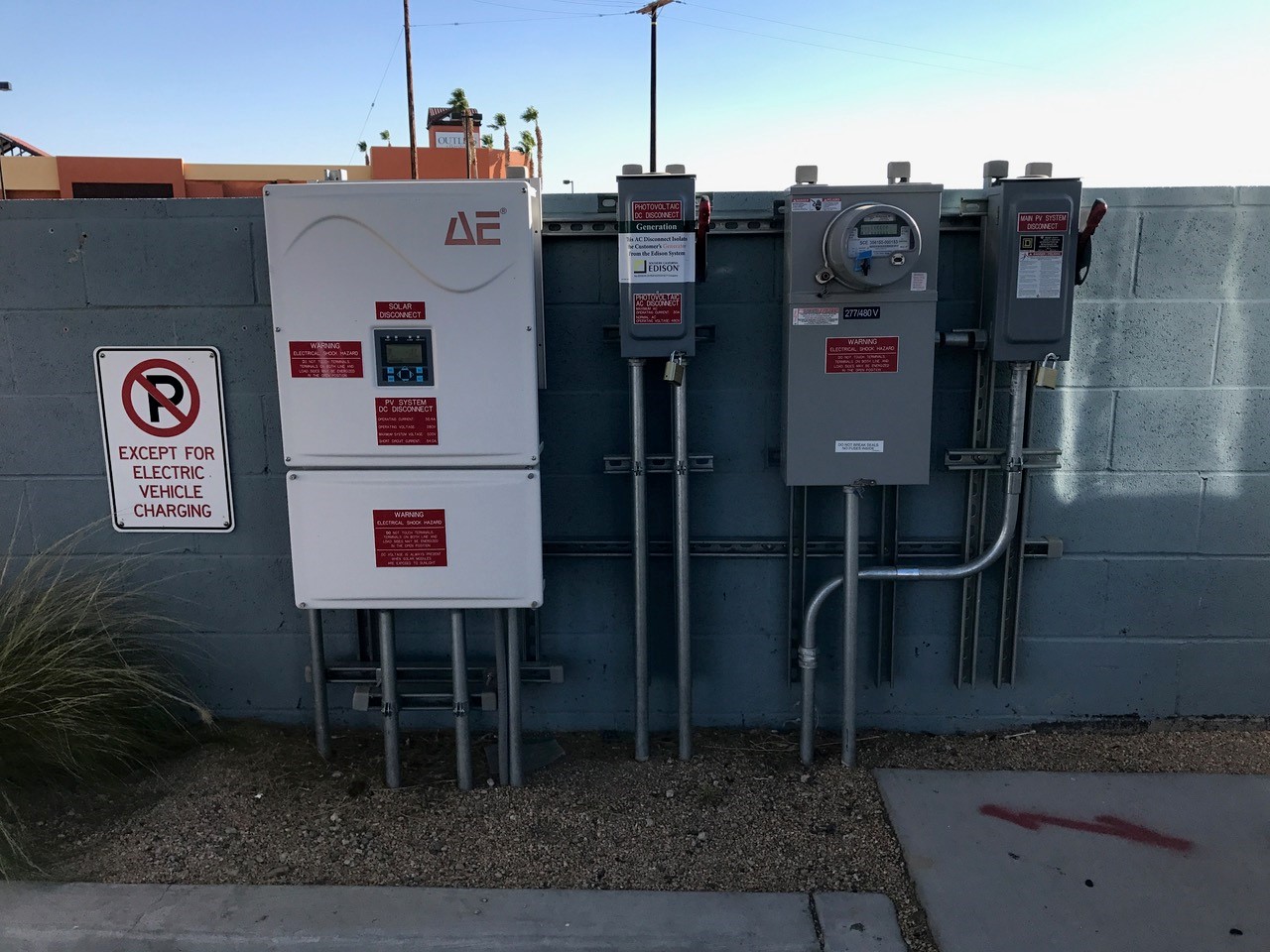
Electrical capacity matters first. If the existing service, panel, transformer, and distribution equipment can support the chargers, the project can stay focused on circuits, conduit, mounting, protection, network setup, and inspection. If capacity is limited, the budget may need to include load management, panel work, a service upgrade, transformer coordination, or phased installation. Our guide to electrical load study cost in Los Angeles explains why capacity planning often saves more money than it costs.
Distance also matters. Running conduit across a parking lot, through a garage, or from a remote electrical room can cost more than the charger. Trenching, saw cutting, concrete repair, asphalt patching, wall penetrations, core drilling, and fire stopping all add labor and coordination. For exterior sites, protective bollards, wheel stops, signage, striping, ADA path of travel issues, and equipment pads can become meaningful parts of the budget.
Level 2 Chargers Versus DC Fast Chargers
Level 2 chargers are the most common choice for workplaces, apartment buildings, condominiums, hotels, medical offices, schools, retail centers, and overnight fleet charging. They are usually the best fit when vehicles stay parked for several hours. The electrical requirements are lower than DC fast charging, and more stalls can often be deployed with smart load management.
DC fast chargers are built for speed and turnover. They make sense for fleet routes, high traffic retail, public charging sites, delivery operations, and commercial properties where drivers need a meaningful charge in minutes instead of hours. They also require much more planning. The project may need larger conductors, heavier switchgear, utility transformer review, equipment pads, cooling clearance, network commissioning, and more extensive permit documentation.
The commercial decision often comes down to dwell time. If employees, tenants, customers, or fleet vehicles park for long periods, Level 2 may deliver the best return. If vehicles need fast turnaround, DC fast charging may be worth the higher infrastructure cost. For broader charger planning, see our Los Angeles EV charger installation guide.
Permits, Utility Coordination, and Load Studies
Los Angeles commercial EV charging projects usually need permit planning before installation. Depending on location and project scope, that may involve LADBS, another local authority, LADWP, SCE, the property owner, an engineer, an architect, the charger network, and sometimes a landlord or tenant improvement team. The project moves faster when everyone is working from accurate electrical information.
A load study helps answer how many chargers the building can support, whether load management can avoid a service upgrade, and whether the first phase should be designed for future expansion. That is especially important for multifamily properties, workplaces, and fleets where the first charger installation is rarely the last. Our article on when Los Angeles businesses need electrical load studies explains the permit and planning side in more detail.
Utility coordination can affect both cost and schedule. If a service increase or transformer change is needed, the utility timeline may become the longest part of the project. Starting with capacity review gives the owner a clearer budget before money is spent on charger hardware, parking design, or a construction schedule that assumes power is already available.
Common Commercial Project Types
Multifamily EV charging often focuses on tenant access, billing, assigned parking, future expansion, and load management. The electrical path may run through garages, electrical rooms, house panels, or tenant meter areas. A good plan avoids installing two or four chargers in a way that blocks the building from adding more later.
Workplace charging usually focuses on daily charging for employees and visitors. Level 2 chargers often work well because cars sit for a full workday. For employers, the project may be part of recruitment, sustainability, tenant improvement, or fleet transition planning. The best design considers how spaces will be assigned, how usage will be billed, and whether the infrastructure should support future chargers.
Fleet charging is more operational. Charger power, vehicle schedule, route timing, parking layout, and electrical demand all matter. Some fleets can charge overnight on Level 2. Others need DC fast charging, staggered schedules, or a dedicated charging depot plan. For these projects, Shaffer Construction connects charger planning with commercial electrical service so the electrical infrastructure supports the business operation, not just the first equipment purchase.
How to Keep the Budget Under Control
The best way to control cost is to avoid designing blind. Before choosing chargers, confirm available electrical capacity, measure distance, review panel space, inspect existing gear, and identify permit constraints. A site that looks simple on a parking plan may be expensive electrically, while another site may support more chargers than expected if load management is used correctly.
Phasing can also protect the budget. A property may install an initial group of chargers while building conduit paths, panel space, or spare capacity for the next phase. This is often smarter than installing only what is needed today with no future path. It can also be more realistic than overbuilding the entire site before tenant demand, fleet demand, or customer usage is proven.
For properties that may also need panel work, review our Los Angeles electrical panel upgrade guide. Panel capacity, breaker space, code compliance, and utility requirements often determine whether a charging project stays simple or becomes a broader electrical upgrade.
What We Need to Price the Project
To prepare a useful commercial EV charger estimate, send the site address, charger count, charger model if selected, photos of the main electrical gear, photos of panel labels, the proposed charger locations, approximate distances from power to parking, and any site plan, electrical drawing, lease requirement, rebate deadline, or utility communication you already have.
If you do not know the charger model yet, send the vehicle type, desired charging speed, number of parking spaces, and how the chargers will be used. Tenant charging, public charging, employee charging, fleet charging, and hotel charging all have different design priorities. We can usually identify whether the next step is a site walk, load study, budget estimate, permit plan, or full construction proposal.
Commercial EV charging is a real construction project. The charger is only one part of it. The money is won or lost in electrical planning, permit strategy, and field execution. Shaffer Construction helps Los Angeles owners choose the path that gets chargers operating without creating avoidable electrical problems later.
Conclusion
Commercial EV charger installation cost in Los Angeles depends on capacity, charger type, distance, site work, permits, utility requirements, and future expansion goals. The fastest way to get a useful number is to start with the property, the electrical gear, and the charging use case instead of shopping charger hardware first.
Shaffer Construction, Inc. plans and installs commercial EV charging infrastructure for Los Angeles businesses, multifamily properties, fleets, retail centers, workplaces, hotels, and parking facilities. We handle load studies, permits, electrical infrastructure, charger installation, inspection support, and commissioning. Contact Shaffer Construction at 323-642-8509 or email hello@shaffercon.com to discuss your commercial EV charger project. Visit shaffercon.com to learn more about our commercial EV charger installation services.