
The Future of Electric Vehicle Charging: Economic Benefits, Technological Innovations, and Government Initiatives
Introduction
The electric vehicle charging infrastructure is experiencing rapid transformation in 2025, driven by significant economic opportunities, groundbreaking technological advances, and unprecedented government investment. For Los Angeles property owners and businesses, this expansion presents both exciting possibilities and important decisions about infrastructure readiness. At Shaffer Construction, Inc., we're witnessing firsthand how EV charging infrastructure is reshaping the landscape of electrical services and sustainable mobility throughout Southern California. This comprehensive guide explores the economic benefits, technological innovations, and government initiatives that are defining the future of electric vehicle charging.
Economic Benefits and Market Growth
The EV charging infrastructure market is experiencing explosive growth. According to recent market analysis, the global EV charging infrastructure market was valued at approximately $31.1 billion in 2025 and is projected to reach $113.4 billion by 2032, representing a compound annual growth rate of 20.3 percent. This dramatic expansion reflects both the growing number of electric vehicles on the road and the substantial economic opportunities associated with charging infrastructure development. As reported by the International Energy Agency's Global EV Outlook 2025, the expansion of charging infrastructure is now a critical factor in accelerating global EV adoption.
Beyond the raw market statistics, charging stations generate tangible economic benefits for surrounding communities. Research demonstrates that installing EV charging stations increases nearby business spending by as much as 1.4 percent, attracting higher-income consumers and exploratory visitors. In California specifically, the economic impact has been substantial, with charging infrastructure attracting millions of dollars in consumer spending. For Los Angeles businesses and property owners, this means that EV charging infrastructure isn't just an environmental investment - it's a smart business decision that attracts customers and generates economic activity.
The job creation potential is equally significant. Building and maintaining EV charging infrastructure creates employment opportunities across installation, maintenance, electrical engineering, and infrastructure development. Shaffer Construction, Inc. has invested in training our team to meet the growing demand for professional EV charger installation, recognizing that skilled electrical contractors are essential to this economic expansion. Government funding programs, including grants and low-interest loans, are helping alleviate development costs and making it more feasible for businesses and property owners to invest in charging infrastructure.
Technological Innovations Transforming EV Charging
The technological landscape of EV charging is evolving at a remarkable pace, with innovations that promise to make charging faster, smarter, and more convenient. One of the most significant advances is ultra-fast charging technology. In 2025, manufacturers are deploying charging systems capable of delivering 400 kilometers of range in just five minutes, powered by next-generation silicon carbide chips, all-liquid cooling systems, and advanced 1,000-volt architecture. These megawatt-level charging systems are expected to see widespread adoption throughout 2025, fundamentally changing how drivers think about charging times.
Bidirectional charging technology, also known as vehicle-to-grid (V2G) or vehicle-to-home (V2H) charging, represents another game-changing innovation. This technology allows electric vehicles to not only draw power from the grid but also send stored energy back to power homes, businesses, or the electrical grid during peak demand periods. Early adoption programs in China and Europe are demonstrating that drivers can earn substantial credits - up to $200 monthly in some cases - by participating in grid support programs. As this technology matures, Los Angeles property owners may find that their EV becomes an asset that generates income while supporting grid stability.
Artificial intelligence and smart charging systems are optimizing how charging infrastructure operates. AI algorithms analyze historical data, real-time weather conditions, grid demand patterns, and user preferences to optimize charging schedules, prevent congestion, and manage peak demand more effectively. These intelligent systems allow charging operators and property owners to make informed decisions that reduce costs and environmental impact. Shaffer Construction stays current with these technological advances to ensure our clients receive charging systems that incorporate the latest smart management capabilities.
Wireless charging technology is also advancing rapidly, with Tesla, BMW, and Hyundai testing wireless charging pads that allow vehicles to charge simply by parking over a designated surface. While still in development phases, wireless charging promises to eliminate cables and connectors, making the charging experience as simple as parking your vehicle. These innovations collectively represent a fundamental shift in how electric vehicles integrate with electrical infrastructure and daily life.
Federal and State Government Initiatives
Government support for EV charging infrastructure has reached unprecedented levels. The federal NEVI (National Electric Vehicle Infrastructure) Formula Program allocates $5 billion over five years to build interconnected charging networks along highway corridors. The complementary Charging and Fueling Infrastructure (CFI) grant program provides an additional $2.5 billion for publicly accessible EV charging. Together, these programs aim to install 500,000 EV chargers nationwide by 2030, with more than 200,000 already operational as of 2025. As detailed by the Joint Office of Energy and Transportation, states are receiving technical assistance and resources to implement these programs effectively.
The Department of Transportation has invested $635 million in grants to add 11,500 additional charging ports to the national network. As of April 2025, 384 NEVI- and CFI-funded chargers were open to the public, with an estimated 57 NEVI-funded stations already operational across 15 states. States are using this federal framework to develop their own aggressive expansion plans. New York, for example, announced a $60 million transaction to accelerate EV charging infrastructure deployment, demonstrating state-level commitment to complementing federal initiatives.
These government programs recognize a critical reality: charging infrastructure is essential to meeting climate goals and supporting the transition to electric transportation. By providing funding and technical assistance, federal and state governments are removing financial barriers and streamlining the deployment process. For businesses and property owners in Los Angeles considering EV charging installation, as discussed in our guide on EV charging infrastructure for Los Angeles property owners, these funding opportunities can significantly reduce installation costs.
Los Angeles-Specific Infrastructure Expansion
Los Angeles is at the forefront of EV charging infrastructure expansion. The City of Los Angeles Department of Transportation (LADOT) has selected its electric to deploy 90 new Level-2 curbside charging ports across the city over the next 12 months. These 24/7 available chargers will serve neighborhoods including Koreatown and other high-demand areas, making public charging more accessible to residents and workers throughout the city. This expansion directly supports Los Angeles's ambitious goal to increase EV adoption by 25 percent and add 100,000 new electric vehicles by 2025.
Beyond curbside infrastructure, Gravity Inc. announced plans to open eight ultra-fast charging locations across the Los Angeles metropolitan area, each featuring 500-kilowatt charging capable of delivering a full charge in approximately five minutes. These megawatt chargers represent the next generation of charging technology and will significantly enhance Los Angeles's charging infrastructure. Los Angeles County has adopted its first Zero-Emission Vehicle Master Plan, recommending the installation of more than 3,700 EV chargers across nearly 450 sites throughout the county.
This aggressive expansion means that Los Angeles property owners and business operators need to prepare their electrical infrastructure for increased demand. Our residential EV charger installation services and commercial solutions help property owners across Los Angeles ensure their electrical systems can safely and efficiently support EV charging infrastructure. The time to plan and prepare your property's electrical capacity is now, before demand overwhelms available installation resources.
Professional Installation and Electrical Infrastructure Requirements
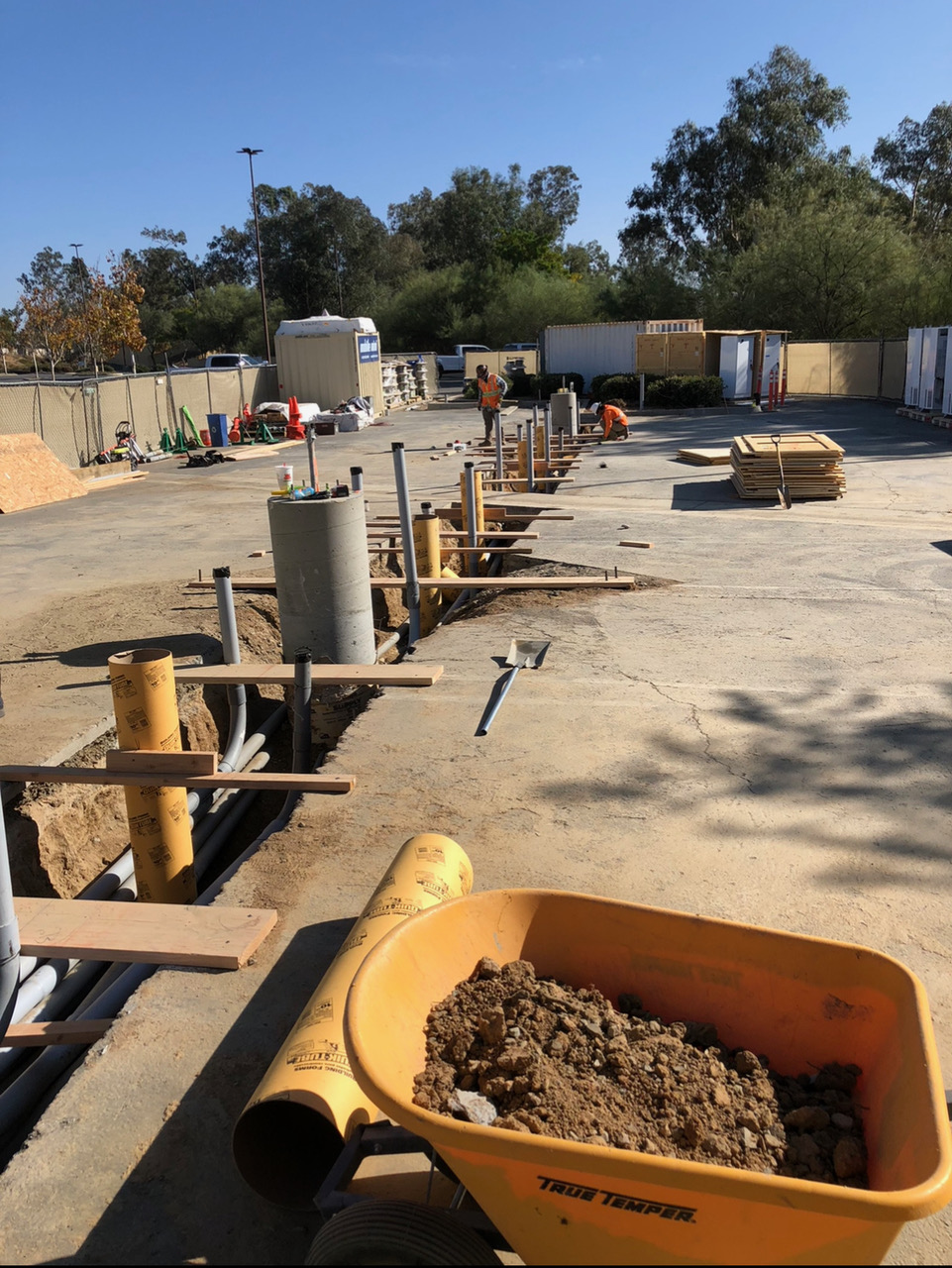
While technological innovations and government funding drive the expansion of EV charging infrastructure, the success of any charging installation depends on professional electrical work and proper infrastructure planning. Many properties, particularly older buildings in Los Angeles, require electrical panel upgrades, load studies, or extensive rewiring to safely support Level-2 or fast-charging installations. Installing improper or undersized charging equipment can create serious safety hazards, overload electrical systems, or result in installations that fail to deliver expected performance.
Professional installation begins with a comprehensive electrical assessment, often including a load study to evaluate your existing electrical capacity and identify necessary upgrades. As discussed in our detailed analysis on preparing Los Angeles buildings for the EV charging boom, this planning stage is critical to successful implementation. Shaffer Construction's experienced electricians bring expertise in California electrical code compliance, permit acquisition, utility coordination, and proper installation techniques that ensure your charging system operates safely and reliably for years to come.
Choosing a licensed, experienced electrical contractor for your EV charger installation isn't a luxury - it's a necessity that protects your investment and ensures compliance with all safety regulations. The commercial EV charger installation services we provide include complete project management, from initial electrical assessment through final inspection and activation.
Preparing Your Los Angeles Property for EV Charging
Property owners and business operators throughout Los Angeles should begin planning their EV charging infrastructure now. With 90 new public chargers being installed, Gravity's ultra-fast stations coming online, and the County's master plan recommending over 3,700 additional chargers, the market is experiencing rapid transformation. Properties that proactively plan and install charging infrastructure will gain competitive advantages, attract higher-income tenants and customers, and position themselves advantageously as EV adoption accelerates.
The planning process should include assessing your property's electrical capacity, understanding available incentive programs, selecting appropriate charging equipment, and securing proper permits and inspections. This is complex work that requires collaboration between electrical contractors, equipment manufacturers, and utility companies. Shaffer Construction has completed hundreds of EV charging installations throughout Los Angeles and understands the specific challenges of Southern California properties, utility requirements, and building codes.
Conclusion
The future of electric vehicle charging is defined by remarkable economic opportunities, transformative technologies, and substantial government investment. For Los Angeles property owners and businesses, this moment presents a unique opportunity to invest in infrastructure that supports sustainable transportation while generating economic value. The rapid expansion of charging networks, breakthrough technologies like mega-watt charging and bidirectional systems, and aggressive funding programs create an environment where EV charging infrastructure investments are more viable and valuable than ever.
Shaffer Construction, Inc. is committed to helping Los Angeles property owners and businesses navigate this transformation. Our team brings expertise in electrical engineering, California code compliance, project management, and customer service to deliver professional EV charging installations that meet the highest standards of quality and safety. Whether you need a residential charger installation, commercial charging infrastructure for a fleet or customer amenities, or a comprehensive electrical assessment to evaluate your property's readiness, our experienced team is ready to help.
Contact Shaffer Construction, Inc. today to discuss your EV charging infrastructure needs and learn how we can help your Los Angeles property embrace the future of electric transportation. Call us at 323-642-8509 or email hello@shaffercon.com to schedule a consultation. Visit our office at 325 N Larchmont Blvd. #202, Los Angeles, CA 90004 to meet our team and discuss your project in detail.