Blink Energy Rebrand Signals Smarter EV Charging for LA
Introduction
When a Los Angeles property owner plans EV charging, the first question is usually how many chargers to buy. The news from the past week suggests a better first question: how much power can the property actually deliver, and when? On October 29, Blink Charging announced a plan to rebrand as Blink Energy, and the California Public Utilities Commission issued a decision on coordinating batteries, EVs, and other flexible loads on the grid. Earlier in October, the California Energy Commission published a new statewide charging needs assessment and opened another round of fast charger incentives.
At Shaffer Construction, we plan and build commercial EV charging infrastructure across Los Angeles, so we read these announcements with one eye on the electrical room. None of the companies or agencies below is describing a Shaffer Construction project, and none of the announcements is a Los Angeles installation. They are national and statewide signals. The local analysis, including what they could mean for your building, is ours.
Blink Plans to Become Blink Energy
The main story is the rebrand. In a press release dated October 29, Blink Charging said it plans to change its name to Blink Energy to reflect three offerings: EV charging, energy management, and battery energy storage. The release gives no effective date for the name change. It says Blink operates more than 48,000 networked chargers worldwide and describes utility demand charges and limited electrical capacity as factors that raise operating costs and complicate expansion, especially at DC fast charging sites.
The release names an energy management platform called EnergyConnect, which Blink says balances loads in real time and lets a site add chargers within existing electrical capacity. According to Blink, it is deployed at 52 company-owned DC fast charging sites, and 26 of them use load management. The company reports that billed peak demand at one site fell 23 percent in the first month, September 2026, and calls that result preliminary and site-specific. Blink also says it has identified locations where it plans to pair batteries with charging, but it names no sites, counts, or timelines.
That is a company announcement, not an independent evaluation, and one site over one month is thin evidence. It is still a useful signal. A major charging operator is telling investors that the hard part of a charging site is no longer the plug. It is the utility bill and the size of the electrical connection. That is consistent with the questions property owners bring us about new chargers.
Why Peak Demand Drives Charging Costs
Many commercial electric bills charge for two things: the total energy used and the highest rate of power drawn during a billing period. Charging equipment can create a sharp spike in the second number. If several vehicles start charging at once, the site can set a high peak even if the total energy used is modest. Blink's release points to this exact problem, and it is why load management and storage are getting so much attention.
For a Los Angeles owner, the practical lesson is that the number of chargers on a plan does not tell you what the project will cost to run. Eight Level 2 chargers that share a managed circuit behave very differently from eight that can all run at full power together. Whether that load lands on a building that has room for it, or forces a service upgrade, is an engineering question that a measured study answers better than a brochure does.
Which rate applies to you also depends on who serves your property. The City of Los Angeles is served by LADWP, and other parts of Los Angeles County are served by Southern California Edison. Each has its own commercial rate structures, so check with your utility how demand is billed before you commit to a charger count. Our guide to commercial EV charger installation cost in Los Angeles shows how capacity, distance, and utility work shape a budget.
California Is Writing Rules for Flexible Load
The second story comes from Sacramento's regulators. In a news release on October 29, the CPUC said it directed Pacific Gas and Electric, Southern California Edison, and San Diego Gas and Electric to jointly propose a framework for coordinating distributed energy resources such as customer batteries, EVs, and flexible building systems. The utilities would use forecasting and scheduling tools to find local grid needs and send signals to eligible resources.
The release also says the utilities must add load flexibility scenarios to their annual distribution planning, starting with the 2028 to 2029 cycle. Those scenarios model how shifting EV charging or using batteries could change the need, timing, and size of grid upgrades. Commissioner Christine Harada said making better use of the existing grid can help connect customers sooner and keep costs down.
Two cautions apply. This is a directive to build a framework, not a program you can enroll in today, and the release does not set dates for utility implementation proposals. It also does not mention LADWP, which is a city-owned utility and is not regulated by the CPUC. So a property inside the City of Los Angeles should not assume this decision applies to its service. A property served by Edison is closer to the action.
Even so, the direction of travel matters. Regulators are treating flexible EV charging as something that can reduce or defer grid upgrades. If your charging system is built to throttle, schedule, and report its load, you are more likely to be able to use programs of this kind later. A system that can only run at full power cannot take part. Our earlier article on utility managed charging programs explains how that idea reached California.
The State Says Charging Still Has a Long Way to Go
The third source puts the scale in view. The California Energy Commission's third AB 2127 assessment, updated October 16, estimates that California will need about 478,000 public and limited access charging ports for light-duty vehicles in 2030, to support 6.8 million EVs. That total includes 53,000 DC fast charging ports, 136,000 ports at large multifamily buildings, and 289,000 public and nonresidential Level 2 ports at places such as workplaces. The assessment says installed ports equal 47 percent of that need as of mid-2026.
The report also covers heavy vehicles. It estimates more than 54,000 ports for 93,000 medium and heavy-duty vehicles in 2030, including more than 43,000 private depot ports, and says installed ports equal 37 percent of that need as of the end of 2025. The page I reviewed does not include county-level numbers for Los Angeles or any discussion of grid impacts, so we are not drawing local port counts from it.
The multifamily figure deserves attention from Los Angeles owners. The state expects large apartment buildings to host a significant share of the charging need, and apartment buildings are where limited electrical capacity is most common. Older buildings often have modest service sizes, tight electrical rooms, and long runs to the parking area. Those are the properties where managed load matters most, and where a measured plan helps avoid buying more service than the building needs.
Money Is Available, but Only for Projects That Are Ready
Funding keeps pace with the buildout, and it favors prepared applicants. On October 7, the Energy Commission announced a new round of Fast Charge California Project incentives, administered through CALeVIP, with at least $28 million for DC fast chargers. Incentives can cover up to 100 percent of eligible costs. The current window runs from October 7, 2026 through January 14, 2027, with up to $100,000 per port, and a next window from February 24 through May 27, 2027 lists up to $55,000 per port.
The eligibility detail that matters most for planning is that projects must be ready to build, which the release defines as having an issued permit and a final utility service design. Chargers must be publicly accessible, and projects in disadvantaged, low-income, and tribal communities get priority. The release does not mention Los Angeles specifically, so check the program's own requirements before assuming a particular site qualifies.
Notice what the readiness rule implies. A permit and a final utility service design are electrical deliverables. They depend on knowing your load, your service capacity, and your equipment layout. An owner who waits for an incentive window to open before starting that work may find the timeline too short. If you want to be positioned for a program like this, an electrical load study and a permit-ready design are the first steps. We also covered a related local program in our recent piece on EV charging where vehicles already stop.
A Northern California Utility Tests Home Flexibility
A fifth item shows how flexible charging looks at the household level. Microgrid Knowledge reported on October 19 that GM Energy and PG&E launched a Smart Charge Bundle on September 14 for PG&E customers who buy or lease a GM EV. It includes a free charger, automatic enrollment in a managed charging program, and optional bidirectional backup power.
The enrollment numbers show how early this is. The article reports 58 customers in the residential vehicle-to-home program as of September 24, and 6 customers in the Smart Charge program, which is capped at 2,000. It also quotes a PG&E executive describing the grid benefit as a hypothesis. This is Northern California, not Los Angeles, and savings figures in the article are possibilities, not guarantees. It is useful mainly as a reminder that smart charging at home is still being tested, and that your charger choice should leave room for it.
What a Los Angeles Owner Should Do Now
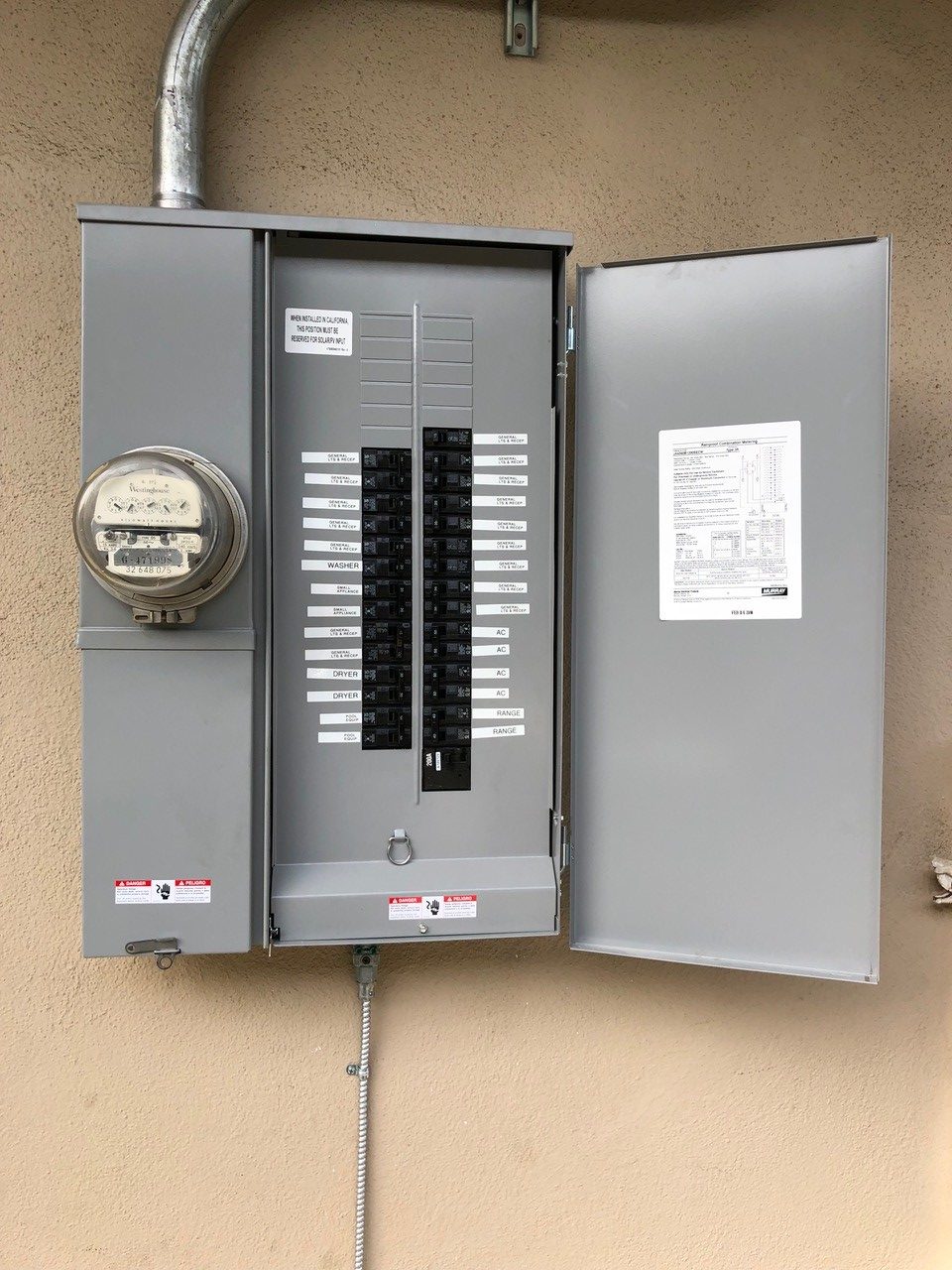
Put these stories together and a plan emerges. Start by learning your real electrical picture. A thirty day monitoring study shows when your building peaks, how much room remains, and whether chargers can share capacity. That information tells you whether you need a modest subpanel, load management, a panel replacement, or a larger service upgrade.
Next, decide how vehicles will use the site. Cars that sit for four or more hours at a workplace or apartment building generally do not need the fastest charging, and Level 2 chargers with managed power can serve more stalls from the same service. Vehicles that must turn around quickly, such as delivery vans or customer fast charging, may justify DC equipment and a bigger connection. If a battery is considered, ask whether it is sized from measured demand and whether the installation will be permitted and inspected properly. A storage system adds equipment, fire and code questions, and utility interconnection steps, and it does not remove the need for sound electrical design.
Finally, ask your utility how your account handles demand, and ask what programs apply to your service territory. The CPUC framework, for example, is aimed at the three investor-owned utilities, while LADWP customers deal with a different set of rules. Our article on who provides electrical load studies in Los Angeles explains what the first step involves.
Conclusion
Blink's rebrand, the CPUC's flexible load decision, and the Energy Commission's charging assessment all point the same way. The next phase of EV charging will be judged by how well a site manages power, not just by how many plugs it has. For Los Angeles owners, that is good news, because careful planning on the electrical side can lower both the construction cost and the monthly bill. It also means the work that matters most happens before the chargers are ordered.
If you own or manage a business, apartment building, warehouse, or parking facility in Los Angeles and want to know what your electrical system can support, Shaffer Construction, Inc. can help with load studies, permitting, and installation. Call 323-642-8509, email hello@shaffercon.com, or visit shaffercon.com to request an estimate.