
The Electric Vehicle Charging Revolution: Key Trends and Future Prospects
Introduction
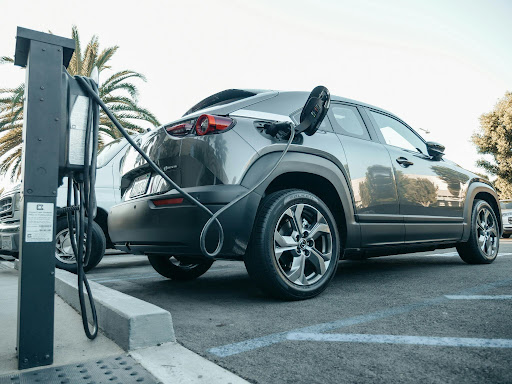
The electric vehicle revolution is no longer a distant future scenario—it's happening right now, and the charging infrastructure supporting it is evolving at a remarkable pace. From ultra-fast 500-kilowatt charging stations that deliver five-minute charge times to intelligent home chargers that optimize energy consumption, 2025 has become a watershed moment for EV infrastructure development. At Shaffer Construction, Inc., we're witnessing firsthand how rapidly this landscape is changing, and we're committed to helping Los Angeles property owners and businesses navigate this transformation with expert installation and infrastructure solutions.
The Acceleration of EV Charging Infrastructure Growth
The United States has experienced explosive growth in EV charging deployment over the past two years. According to the Department of Energy, the nation now has approximately 204,000 public chargers and publicly accessible workplace chargers for light-duty vehicles as of early 2025. This represents a remarkable 35% increase from just 151,000 chargers in mid-2023. In 2024 alone, more than 40,000 new chargers were deployed—the highest number in any single year on record.
The growth of DC fast charging has been particularly pronounced. The number of DC fast chargers increased by 56% between 2023 and 2024, climbing from approximately 33,000 to 51,000 chargers nationwide. These dramatic expansion rates underscore the critical importance of infrastructure development as EV adoption continues to accelerate. Shaffer Construction is actively involved in this infrastructure transition, helping Los Angeles businesses and homeowners install both residential and commercial charging solutions that meet their specific needs.
Looking ahead, the International Council on Clean Transportation projects that 16,700 new DC fast charging ports will open in 2025 alone—a 16% year-over-year increase. If current deployment rates hold steady, the total number of fast charging ports in the United States will surpass 100,000 by 2027. This expansion is essential to support the anticipated 15-20 million electric vehicles expected to be on American roads by 2030.
The Evolution of Charging Technology: Ultra-Fast and Beyond
One of the most significant trends emerging in 2025 is the industry's decisive shift toward ultra-fast charging infrastructure. According to recent International Energy Agency analysis, the share of chargers with power capacities of 250 kilowatts or higher has risen from 25% to 38% of all new deployments. Meanwhile, lower-capacity chargers are declining in proportion, indicating that network operators are investing in infrastructure built to serve the next generation of high-performance electric vehicles.
This shift matters significantly for Los Angeles property owners. Charging technology advancement means that both commercial fleets and residential users now have access to faster, more reliable solutions. The move toward 350-kilowatt and 400-kilowatt charging systems represents a fundamental change in how quickly and efficiently vehicles can replenish their batteries. BYD's Super-e platform, introduced in early 2025, exemplifies this trend by delivering approximately 400 kilometers of driving range in just five minutes of charging. Shaffer Construction stays current with these technological advances to ensure that when you install a charger today, it's built on the latest standards and capable of serving your needs for years to come.
Beyond raw power capacity, charging networks are emphasizing reliability and station design. Reliability metrics for public chargers have improved to 85.5%, reflecting the industry's focus on replacing aging hardware with more dependable equipment. Additionally, network operators are increasingly deploying larger stations with more charging ports per location, creating what industry analysts call "Charging 2.0"—a maturation phase where customer experience, scalability, and operational excellence take precedence over subsidies and incentives.
Los Angeles: A Model for Metropolitan EV Charging Expansion
Los Angeles has emerged as a leader in EV charging infrastructure development, with ambitious expansion plans that position the city at the forefront of the national transition to electric transportation. The city's Department of Transportation recently selected it's electric to deploy 90 new curbside Level-2 charging ports across Los Angeles neighborhoods, featuring innovative detachable cable technology that provides 24/7 public access to residents. These chargers are strategically installed in high-density neighborhoods, with initial deployments in Koreatown and planned expansions throughout the city.
Beyond public infrastructure, Los Angeles County has adopted its first-ever Zero-Emission Vehicle Master Plan, which recommends the installation of more than 3,700 EV chargers across nearly 450 sites throughout the county. This comprehensive approach addresses the charging needs of residents, businesses, and government fleet operations. The plan specifically emphasizes promoting EV ownership, enhancing charger reliability, and expanding infrastructure throughout the region—goals that align perfectly with Shaffer Construction's mission to support the electrification of Los Angeles.
Perhaps most impressively, private sector innovation is accelerating across the region. Gravity Inc. announced that it will open eight ultra-fast 500-kilowatt charging locations in the Los Angeles metropolitan area during 2025. These stations will enable drivers to add over 200 miles of range in approximately five minutes, fundamentally changing the experience of long-distance EV travel. As detailed in our guide to EV charging infrastructure in 2025, these advancements transform what was once a logistical challenge into a seamless experience for Los Angeles drivers.
The convergence of public investment, private sector innovation, and municipal planning has created a unique moment for Los Angeles property owners. Whether you operate a multifamily residential building, commercial real estate, or a fleet operation, the infrastructure supporting your transition to electric vehicles is rapidly expanding. Shaffer Construction is positioned to help you take advantage of these opportunities with expert installation and infrastructure planning.
Residential and Commercial Charging: Different Solutions for Different Needs
The EV charging landscape encompasses two distinct but equally important categories: residential charging and commercial charging. Understanding the differences between these solutions is crucial for property owners making infrastructure investments.
Residential charging focuses on Level-2 chargers (7-19 kilowatts) installed in single-family homes, multifamily buildings, and residential communities. These chargers deliver sufficient power to replenish most EV batteries overnight, typically adding 20-30 miles of range per hour of charging. For the average Los Angeles commuter with daily driving needs under 40 miles, a home charger is often all that's needed. Our residential EV charger installation services include comprehensive site assessment, electrical panel evaluation, load studies, permit acquisition, and professional installation to ensure your home charging solution is safe, compliant, and optimized for your specific electrical system.
Commercial charging, by contrast, encompasses Level-2 chargers for workplace charging and fleet operations, as well as DC fast chargers for high-traffic locations like highways, retail centers, and commercial districts. As discussed in our comprehensive article on planning EV charger infrastructure, commercial deployments require careful consideration of power requirements, space constraints, user traffic patterns, and long-term scalability. Many Los Angeles businesses are now installing Level-2 chargers in parking facilities as an employee benefit and customer amenity, while others are partnering with network operators to deploy DC fast chargers on their properties.
The financial picture for both residential and commercial installations has improved significantly. Federal tax credits continue to support residential home installations, while commercial deployments benefit from various state and local incentive programs. Shaffer Construction helps clients navigate these incentive programs and identify the most cost-effective solutions for their specific circumstances. Whether your goal is to attract and retain employees with workplace charging, enhance your property's value with residential infrastructure, or position your business as an environmental leader, we have the expertise to design and implement the right solution.
Infrastructure Planning: What Property Owners Must Know
As EV adoption accelerates and charging networks expand across Los Angeles, forward-thinking property owners are proactively planning their infrastructure investments. Several critical considerations emerge from current industry trends.
First, electrical capacity and load studies are essential. Most existing buildings in Los Angeles were designed for a fundamentally different electrical load profile than what EV charging infrastructure demands. A single DC fast charger can draw 200-350 kilowatts of power, equivalent to the baseline power consumption of multiple homes. Before installing chargers, property owners must conduct thorough electrical assessments to determine whether panel upgrades are necessary. Shaffer Construction frequently conducts electrical load studies that evaluate your current electrical system's capacity and identify the safest, most cost-effective path to supporting EV charging infrastructure.
Second, strategic location selection matters. Charger placement should consider driver convenience, sight lines for safety and security, and electrical proximity to the service panel. Public-facing chargers in commercial settings should be readily accessible and visible to encourage use. Residential chargers should be located to minimize cable runs and electrical complexity. Planning these details in advance prevents costly relocations and maximizes the value of your infrastructure investment.
Third, future-proofing is essential. Even if your immediate charging needs are modest, installing infrastructure with excess capacity or designing the electrical system to support future expansion is typically more cost-effective than retrofitting later. The technology landscape is rapidly evolving, and installing infrastructure today that can support tomorrow's higher-capacity chargers makes economic sense for any serious property owner.
Market Projections and Industry Outlook Through 2030
The fundamental economics driving EV charging expansion remain robust. The global EV charging infrastructure market, valued at approximately $31.1 billion in 2025, is projected to reach $113.4 billion by 2032, representing a compound annual growth rate of 20.3%. In the United States specifically, the electric vehicle charging infrastructure market size was valued at $5.09 billion in 2024 and is projected to grow at 30.3% annually through 2030.
These growth projections reflect multiple converging trends. EV adoption rates continue to accelerate, with EVs now representing an increasing share of new vehicle sales nationally and in California specifically. California now has 48% more EV chargers than gasoline fuel stations, a symbolic milestone demonstrating the infrastructure transformation already underway. Additionally, publicly announced investments from retailers, automakers, and charging network operators total commitments for 164,000 new DC fast chargers and 1.5 million new Level-2 chargers in the years ahead.
For Los Angeles specifically, the Mayor's Sustainable pLAn established an ambitious goal of increasing EV adoption by 25%, which translates to adding 100,000 new electric vehicles in the city by 2025. With this influx of EVs comes inevitable demand for charging infrastructure. Property owners who invest in charging solutions today position themselves to serve this demand and enhance their properties' value and appeal to environmentally conscious residents and tenants.
Conclusion
The electric vehicle charging revolution of 2025 represents a pivotal moment in transportation history. Rapid technology advancement, expanding public infrastructure, private sector innovation, and supportive policy environments are converging to create unprecedented opportunities for property owners willing to invest in charging infrastructure. Los Angeles, with its combination of high EV adoption rates, proactive municipal planning, and dense urban environment, stands at the center of this transformation.
Whether you're a residential property owner seeking to install a home charger, a commercial real estate operator planning fleet or tenant charging solutions, or a business looking to position yourself as an environmental leader, the time to act is now. The infrastructure is expanding, the technology is proven and reliable, and the economics are increasingly favorable.
For expert electrical services in Los Angeles, including EV charger installation, electrical load studies, panel upgrades, and complete infrastructure planning, contact Shaffer Construction, Inc. Call us at 323-642-8509 or email hello@shaffercon.com to schedule a consultation. Visit our website at shaffercon.com to learn more about our comprehensive EV charging and electrical services. Let us help you capitalize on this transformative moment and build the charging infrastructure that will serve Los Angeles for decades to come.